


Most homes tell a story once the furniture is moved. A couch that’s been against the same wall for years. A dresser that never budged. You don’t notice anything while everything stays in place, but once a room is rearranged or emptied, the walls make it obvious. Paint looks different where the furniture used to sit, and the contrast can be hard to ignore. Long-term furniture placement affects wall paint in ways that develop slowly and quietly. It’s important to understand what actually happens behind and around furniture over time, why those changes occur, and what you can do about them. If you’re planning to repaint, update a room, or get ready for a remodel, knowing what to expect can save you extra work and unnecessary fixes.
Why does long-term furniture placement change the wall paint?
Wall paint is meant to handle everyday exposure. Light, air circulation, and routine cleaning are all part of what it’s designed for. What it doesn’t handle well is being blocked off by large pieces of furniture for years at a time. When furniture stays in the same spot:
- Airflow is restricted
- Light exposure becomes uneven
- Pressure builds at contact points
- Dust and moisture begin to get trapped
Individually, these factors seem minor. Over time, they combine into visible paint changes that are hard to ignore once exposed.
Why do wall paint scuffs and marks go unseen before the move?
As long as furniture stays in the same place, most people don’t notice what it’s doing to the wall. A sofa can sit against one spot for ten years, while the paint behind it slowly changes. But since it’s hidden, it never registers as a problem.
The surprise comes when the room is cleared. That usually happens during a move. Furniture is taken out, walls are suddenly visible, and the differences jump out right away. In many cases, people hire professional movers to avoid further damage during that process. Local companies are often brought in specifically to handle heavy pieces without scraping walls or floors, a prime example being Columbine Moving and Storage Colorado. Once the furniture is gone, though, the timing can be misleading. The marks look new because they were just uncovered. Darker rectangles, dull patches, or worn areas appear where nothing seemed wrong before. It’s common for homeowners to assume the damage happened during the move and is caused by the movers themselves.
Most of the time, that’s not the case. What you’re seeing is years of pressure, blocked light, and uneven aging finally exposed. The wall didn’t change overnight. You just hadn’t seen it until the furniture moved.
Light exposure and uneven fading
Sunlight is one of the biggest contributors to paint aging. Even indirect daylight slowly fades pigments. When a sofa or cabinet blocks part of the wall, that section is shielded from light while the surrounding paint continues to age.
After a few years, this creates a clear outline when the furniture is moved. The covered area looks darker or richer, while the exposed wall appears washed out.
This effect is most noticeable with dark or bold paint colors, south or west-facing walls, and rooms with large windows or skylights.
![]() Pressure marks and surface wear
Pressure marks and surface wear
Heavy furniture pressed against a wall does more than remain in place. Over time, weight transfers unevenly through legs, backs, and corners. The furniture can appear stationary, while subtle shifts occur as floors settle, temperatures change, and the furniture is used day after day.
These small movements can burnish the paint, thereby creating shiny spots, flattening textured finishes, and leaving indentations or rub marks.
Paint finishes like matte or eggshell show this damage more clearly than glossier paints. And once the surface texture changes, repainting is often the only way to restore a uniform look.
Trapped dust and moisture buildup
Furniture pushed tightly against walls creates pockets where dust and humidity behave differently. Air cannot circulate properly, so moisture from daily living lingers longer.
Over time, this can lead to:
- Dark smudges or shadowing
- Mild discoloration
- Paint that feels tacky or chalky when exposed
In humid climates or poorly ventilated rooms, long-term furniture placement may even contribute to mold spotting behind large items, especially on exterior walls.
Scuffing from repeated micro-movement
Even furniture that never moves actually does. Sitting down on a couch, opening a heavy wardrobe, or bumping a bed frame creates repeated micro-movements against the wall.
These cause horizontal scuff lines, paint thinning at contact points, and small chips near corners or trim.
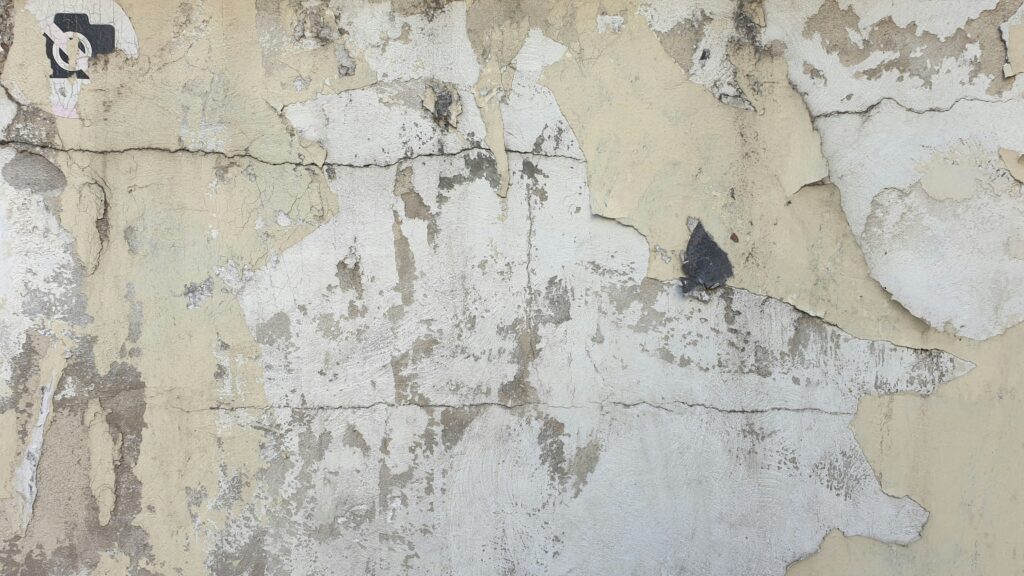
Long-term furniture placement can lead to paint chipping
Certain rooms show more damage than others
Not all spaces are affected equally.
Long-term furniture placement issues are most common in:
- Living rooms, where couches, entertainment centers, and bookcases tend to stay put for years.
- Bedrooms, since beds and dressers are rarely moved, are particularly common in smaller rooms.
- Dining rooms, because buffets and cabinets often rest against walls permanently.
- Rooms with higher humidity or more sunlight, both of which amplify paint damage faster than lighting in interior, low-light spaces.
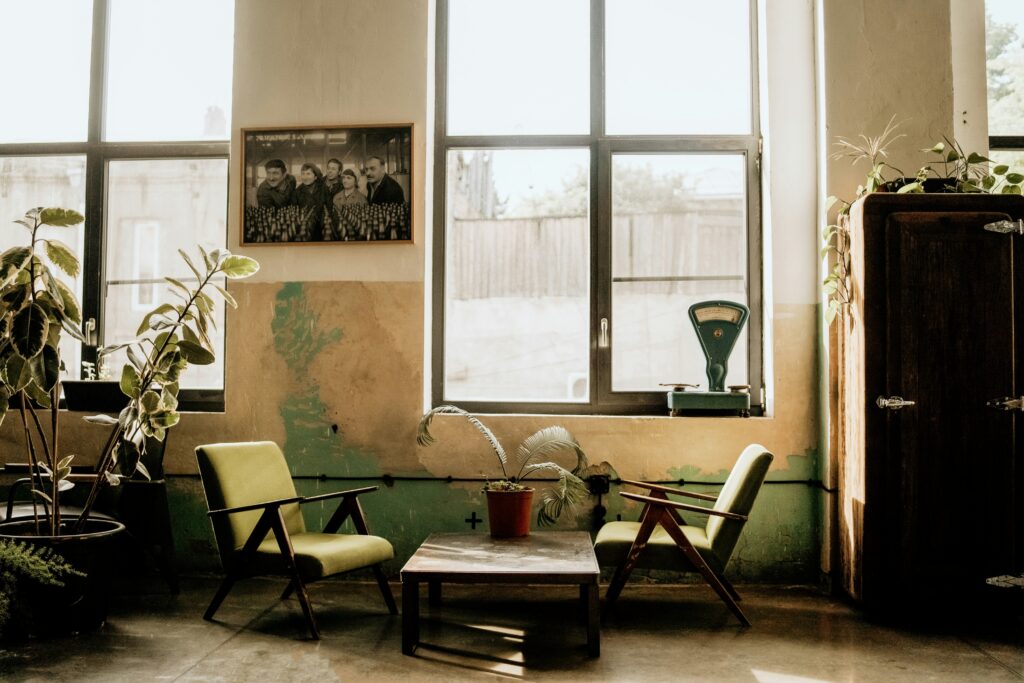
Some rooms are more prone to paint damage related to furniture placement.
How paint type influences long-term damage
Paint quality and finish play a significant role in how visible furniture-related damage becomes.
In fact, lower-quality paints tend to fade faster, scuff more easily, and absorb moisture unevenly.
Flat and matte finishes hide wall imperfections initially but reveal wear once disturbed. On the flip side, satin and semi-gloss finishes resist scuffs better but can show shine
differences where furniture rests.
If repainting is planned, choosing the right finish for furniture-heavy rooms reduces future issues.
Preventing paint damage from furniture placement
You do not need to rearrange your home monthly to protect your walls. Small adjustments make a noticeable difference over time.
Helpful practices include:
- Leaving a small gap between furniture and walls
- Using felt pads or rubber bumpers on contact points
- Rotating furniture placement every year or two
- Occasionally pulling furniture away to clean and air out the walls
When repainting is unavoidable
Sometimes, furniture placement damage is too obvious to ignore. This damage is common in rental properties, older homes, or spaces with bold wall colors.
Full repainting is usually necessary when:
- Color contrast is sharp
- Texture differences are visible
- Moisture staining has occurred
- Multiple furniture outlines overlap
While repainting costs more upfront, it avoids repeated touch-ups that never quite match.
Final thoughts
Long-term furniture placement affects wall paint in ways that are easy to overlook but hard to undo. Uneven fading, pressure marks, trapped moisture, and scuffing all develop quietly over time. Whether you are refreshing a room, preparing to move, or simply rearranging your space, being aware of how furniture interacts with paint helps you make better decisions.