


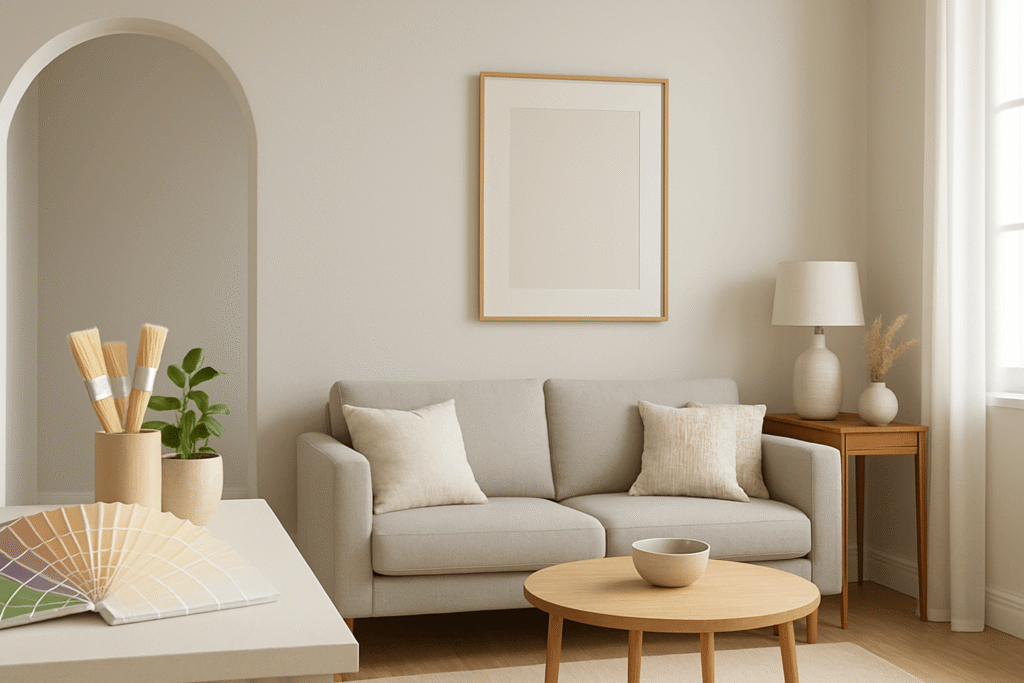
Choosing the best paint color for a whole house interior can feel overwhelming, but the right choice brings harmony, light, and flow to every room.
A single cohesive color or a carefully chosen palette helps your home feel larger, balanced, and timeless.
The goal is to pick a versatile shade that works with different lighting, design styles, and finishes while staying easy to live with over the long term.
Best Whole House Paint Colors
Below are some of the most trusted and versatile shades recommended by professionals and designers. These colors adapt well across different rooms and styles, making them strong contenders for a unified whole-house look.
Whites and Off-Whites
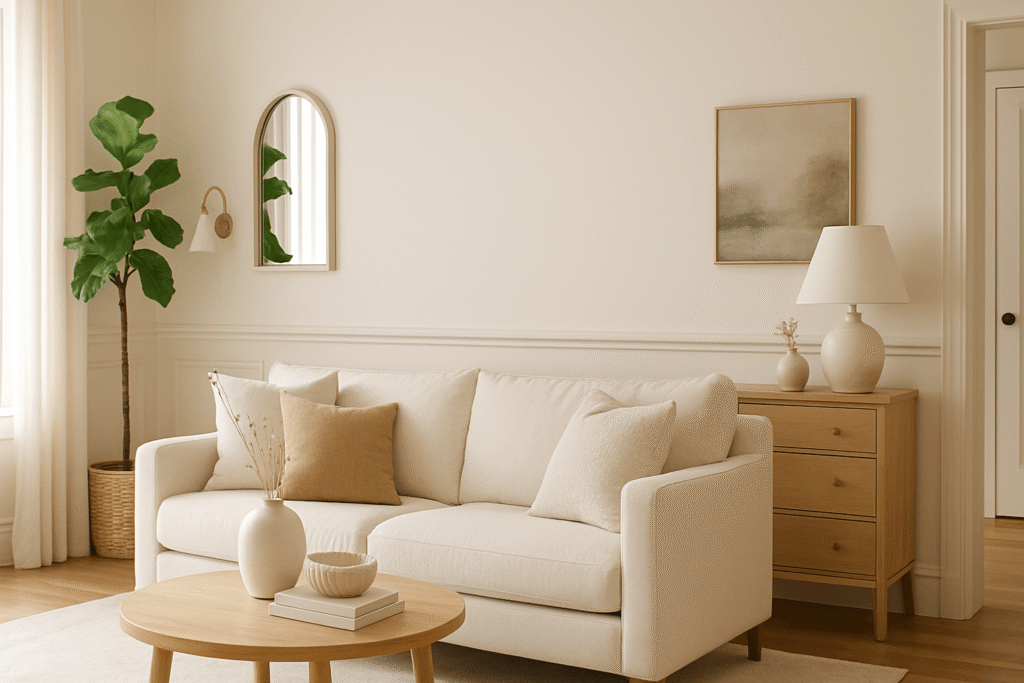
These shades are perfect for creating bright, airy interiors. They work especially well in living rooms, kitchens, and open spaces where you want a clean and timeless backdrop.
Brand Recommendation:
- Benjamin Moore Swiss Coffee (OC-45): A creamy white with depth and warmth. Pairs well with stone, wood, and black accents.
- Sherwin-Williams Alabaster (SW 7008): A calming, warm white that works in almost any space.
- Benjamin Moore White Dove (OC-17): Known for balance, sitting between stark white and ivory, with a soft creaminess.
- Sherwin-Williams Shoji White (SW 7042): A neutral off-white blending cream and taupe, recommended for walls, trim, and even exteriors.
Greiges and Taupes
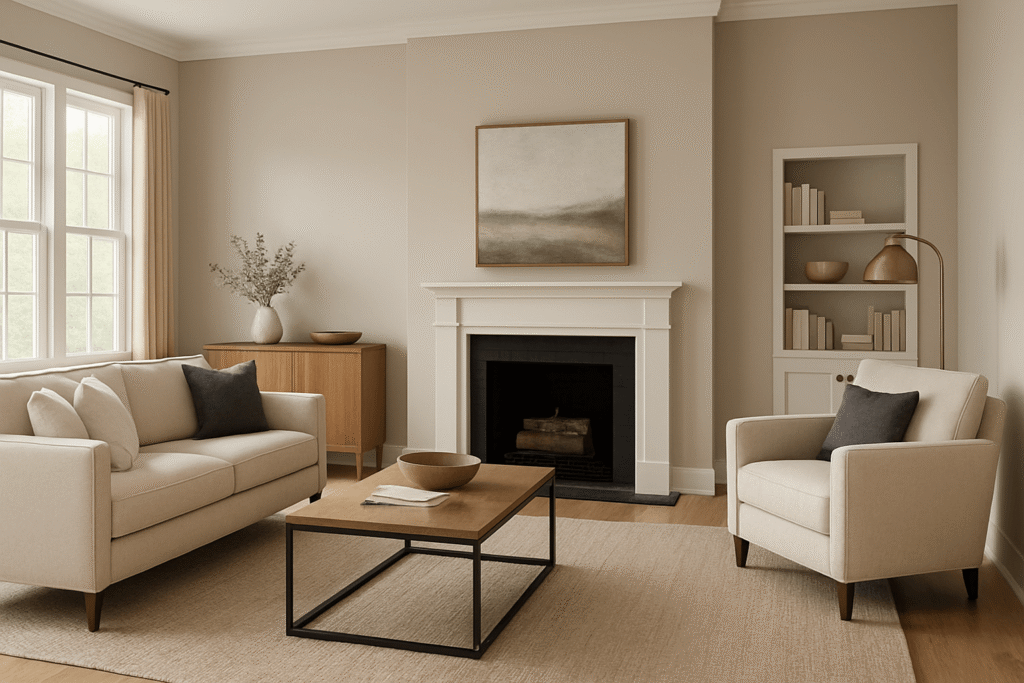
Greiges and taupes are versatile whole-house colors that feel warm but balanced. They’re ideal for open-concept layouts, transitional spaces, and homes with both natural wood and modern finishes.
Brand Recommendation:
- Sherwin-Williams Agreeable Gray (SW 7029): A balanced greige loved for its broad appeal. Excellent for open-concept layouts and resale value.
- Benjamin Moore Classic Gray (OC-23): A subtle gray-beige that feels airy and minimal without looking cold.
- Sherwin-Williams Accessible Beige (SW 7036): Slightly warmer than Agreeable Gray, ideal for pairing with wood and stone.
- Sherwin-Williams Drift of Mist (SW 9166): A soft greige that adjusts beautifully in different lighting conditions.
- Benjamin Moore Balboa Mist: Light greige with a touch of warmth, complements wood floors and white trim.
Beiges and Tans
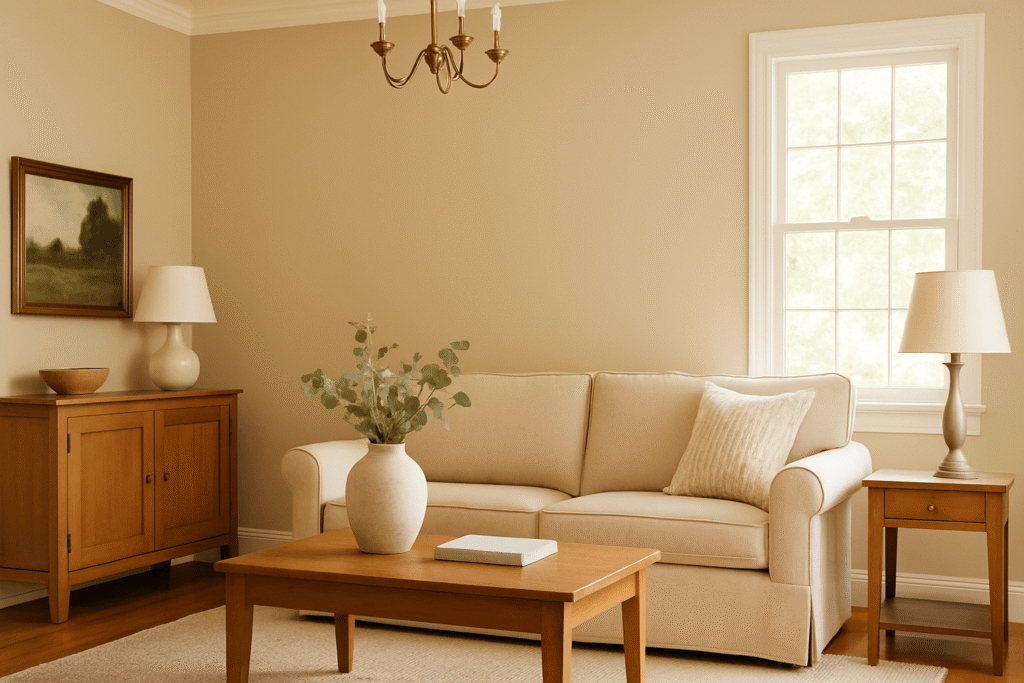
Beige tones bring warmth and comfort, making them well-suited for family rooms, bedrooms, and spaces where you want a soft, welcoming atmosphere.
Brand Recommendation:
- Sherwin-Williams Natural Tan (SW 7567): A creamy tan with minimal undertones, easy to pair with warm or cool accents.
- Sherwin-Williams Natural Linen (SW 9109): A light, modern beige with soft undertones.
- Sherwin-Williams Balanced Beige (SW 7037): A deeper neutral for homes that receive strong natural light.
Neutrals with a Hint of Color
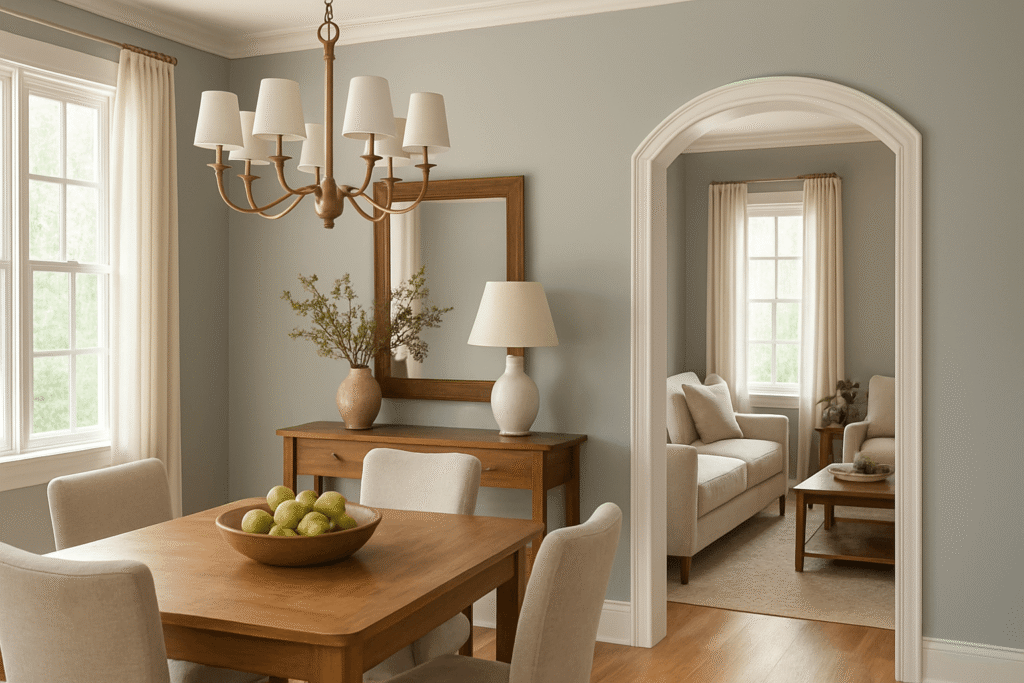
These muted shades introduce personality without overwhelming a room. They’re best for offices, dining rooms, or accent areas where a subtle touch of color adds depth and interest.
Brand Recommendation:
- Sherwin-Williams Austere Gray (SW 6184): A muted gray-green that adds refinement without overwhelming.
- Sherwin-Williams Reflection (SW 7661): A soft blue-gray that feels light and serene, especially in coastal or transitional homes.
- Benjamin Moore Silver Satin (OC-26): A delicate gray with a violet undertone that keeps it crisp yet inviting.
What to Consider Before Picking a Whole House Color
Before choosing the best paint color for a whole house interior, it helps to weigh a few practical factors that influence how a color will actually look and feel in your home.
1. Light Reflectance Value (LRV)
Paint colors behave differently depending on how much light they reflect. Most homeowners choose an LRV between 60–80 for main living areas to keep rooms light and bright. Anything under 45 will look moodier and more dramatic.
2. Fixed Elements
Your wall color needs to connect with what’s already in your home—floors, cabinets, countertops, trim, and large furnishings. Neutrals are especially powerful when their undertones tie into these permanent features.
3. Undertones
Even the most neutral paint carries subtle undertones of yellow, green, red, or gray. Matching these undertones with your flooring and finishes avoids clashing and creates a natural flow.
4. Lighting and Exposure
Colors change dramatically with natural and artificial light. A shade may feel warm in a south-facing room but cooler in a north-facing one. Always test before committing.
5. Trim and Ceilings
Crisp, consistent trim and ceiling colors frame your wall color beautifully. Many homeowners use the same shade of white across trim, ceilings, and doors, but adjust sheen levels for contrast.
6. Sheen Level
The finish affects both durability and look. Eggshell or matte finishes work well for walls, satin for cabinets, semi-gloss for trim, and flat for ceilings. For busy homes, satin is smart in kitchens, baths, and kids’ spaces.
Mistakes to Avoid When Choosing a Whole House Color
Selecting the best paint color for a whole house interior can go wrong if you overlook a few key details. Avoiding these mistakes will save time, money, and frustration down the road.
1. Ignoring Undertones
Many neutrals carry subtle undertones that may clash with your flooring, cabinets, or countertops. For example, a beige with pink undertones can look awkward next to warm wood, while a gray with blue undertones might feel cold against cream trim.
Always compare samples against your fixed elements to catch undertones before painting an entire room.
2. Choosing Colors That Are Too Stark
Bright whites or dark charcoals may look appealing in inspiration photos, but across an entire home, they often feel harsh or overwhelming. Softer neutrals with a balanced undertone usually provide a more welcoming and versatile backdrop.
3. Forgetting to Test in Different Lighting
A color that looks perfect in a sunny living room can appear completely different in a north-facing bedroom. Failing to test paint in multiple rooms and at different times of day often leads to disappointment once the paint is on every wall.
4. Following Trends Too Closely
Trending shades can be exciting, but they may date your home quickly. A whole-house color should feel timeless and adaptable, with trendy hues reserved for accents or smaller projects.
5. Overlooking Finish and Sheen
Even the right color can fall flat if paired with the wrong finish. Flat or eggshell is best for walls, but trim and doors often need satin or semi-gloss for durability and contrast.
By sidestepping these mistakes, you’ll be more confident in choosing a whole-house color that looks consistent, timeless, and easy to live with.
Expert Advice on Choosing the Right Color
- Test Before You Commit: Use paint samples on large boards or peel-and-stick sheets. Move them around your home to see how the color reacts in different rooms and lighting.
- Think in Palettes: While one color can unify a home, sometimes a trio of shades works best. A dominant color for main spaces, a secondary shade for transitions, and an accent color for character keeps things cohesive without feeling repetitive.
- Adjust if Needed: If you love a color but find it too dark, ask the paint store to lighten it by 25–50 percent. This small change can make it more versatile.
- Trends vs. Timeless: Trend colors come and go, but well-chosen neutrals stay relevant for years. Focus on what works with your permanent finishes rather than chasing the latest fad.
- Choose a Reputable Paint Brand: The quality of the paint impacts both appearance and longevity. Trusted names like Sherwin-Williams, Benjamin Moore, and Behr provide consistent coverage, durability, and reliable results. Selecting from the best paint brands ensures the color you pick performs as well as it looks.
Making the Right Choice for Your Whole House
The best paint color for a whole house interior is one that balances light, undertones, and existing finishes while creating a natural sense of flow.
Colors like Swiss Coffee, Agreeable Gray, White Dove, and Accessible Beige are timeless favorites that work in many styles and lighting conditions.
By testing carefully and thinking about your home as a connected whole, you can choose a color that feels fresh, cohesive, and comfortable for years to come.
If you’re searching for the best paint color for whole house interior, start with versatile neutrals and refine based on your light, furnishings, and lifestyle. The right choice will make your home feel brighter, more unified, and easier to live in every day.